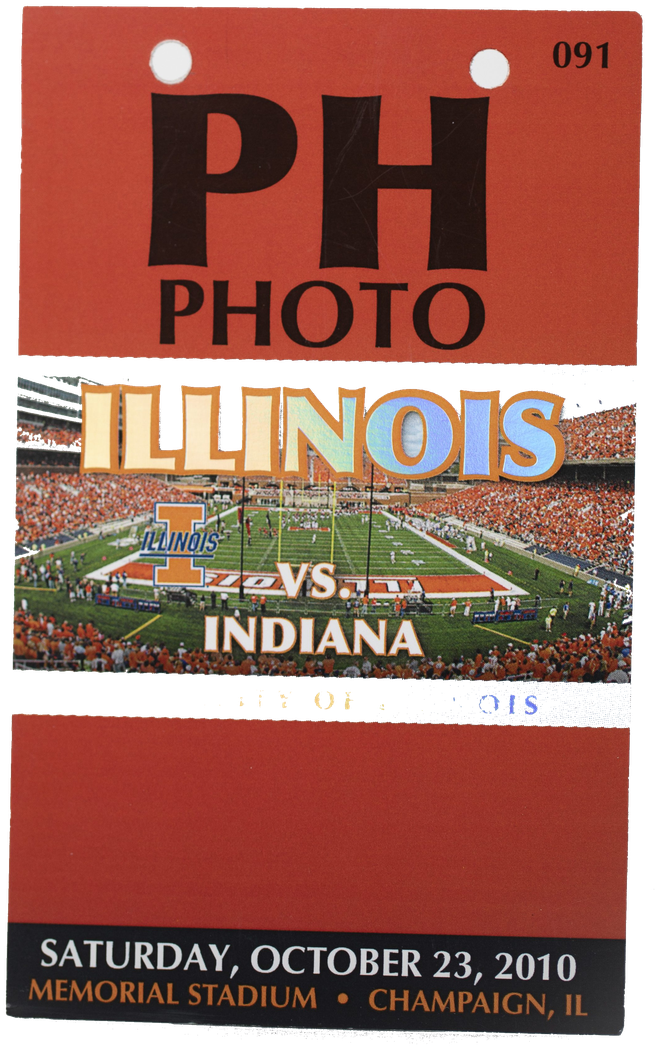
Most meeting planners order their first round of event passes the same way they order signage: find a vendor, approve a proof, and move on to the next line item. The credential shows up on time, looks decent on a lanyard, and nobody thinks about it again until someone unauthorized walks into a restricted area with a color copy tucked into a badge holder.
That moment, when a security director radios the ops desk about a suspect pass and the ops desk has no way to verify it, is the moment the credential becomes the most consequential purchase on the event budget. Access Event Solutions has spent more than two decades manufacturing custom credentials for touring acts, championship sports teams, and professional conferences, and the pattern repeats: the planners who treat credential sourcing as a design decision end up scrambling, while the ones who treat it as a security and fulfillment decision run smoother events.
The difference between the two groups usually comes down to knowing which questions to ask before signing a purchase order.
What Should You Look for in Pass Materials Before Anything Else?
The substrate your pass is printed on determines how it performs under real event conditions, not just how it looks in a proof file. A credential that curls, fades, or delaminates during a three-day conference signals to your attendees and sponsors that the details were an afterthought.
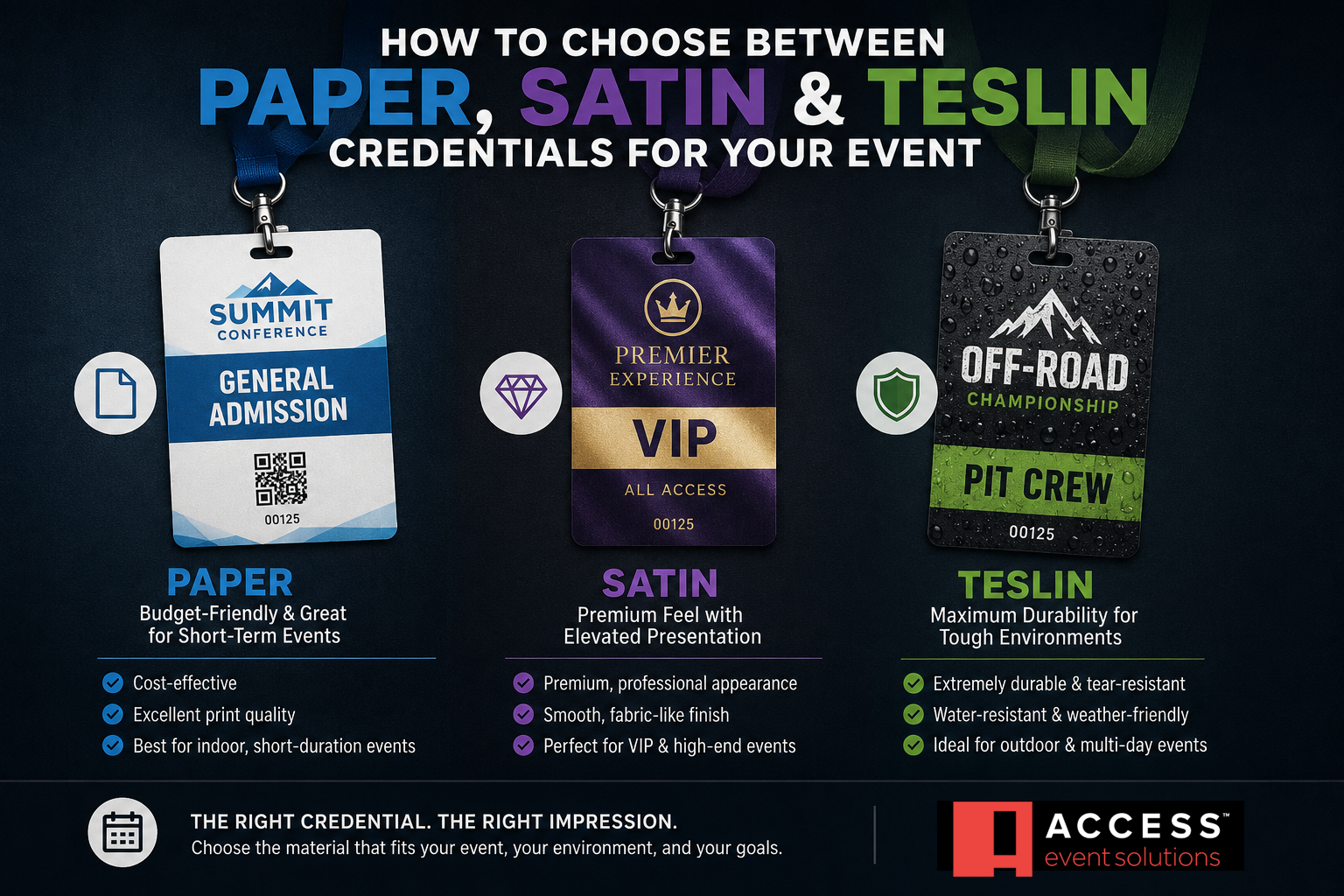
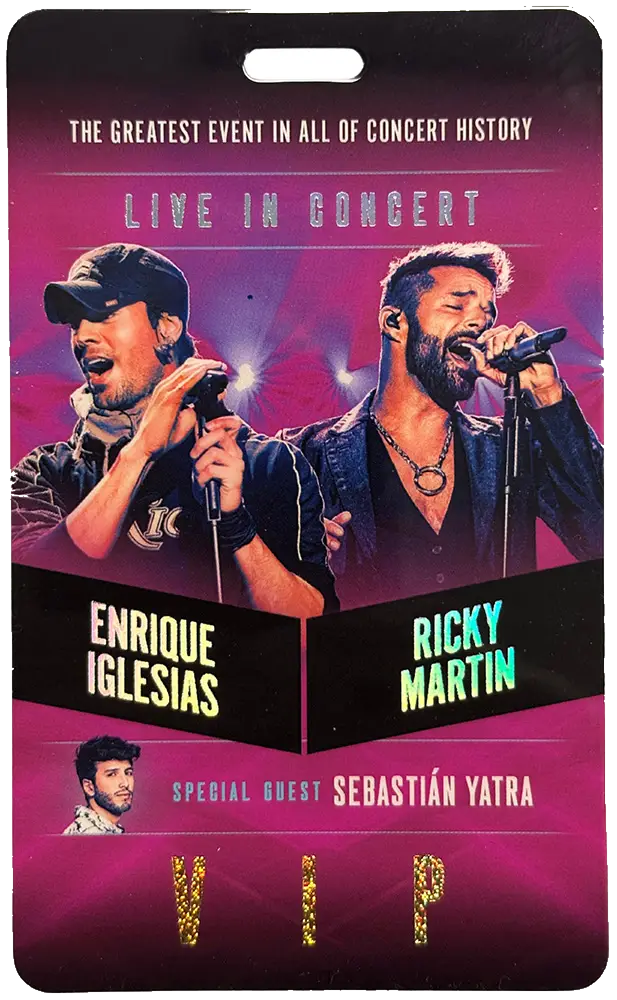
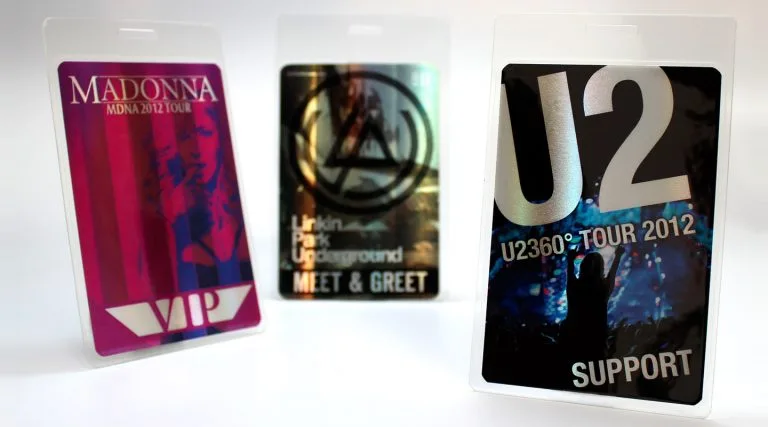
Teslin, a synthetic paper, has become the standard for multi-day laminates because it bonds directly into the lamination process. That bond creates a single sealed unit that cannot be peeled apart or tampered with, which is why you see it on tour laminates and VIP credentials at major festivals. Laminated Teslin resists water, tearing, and the kind of general abuse that comes from a credential being worn for 40 hours straight in sun, rain, and crowd crush. PVC hard cards offer a different advantage: rigidity. They feel substantial, sit flat on a lanyard without flipping backward, and accept embedded RFID chips without compromising structural integrity.
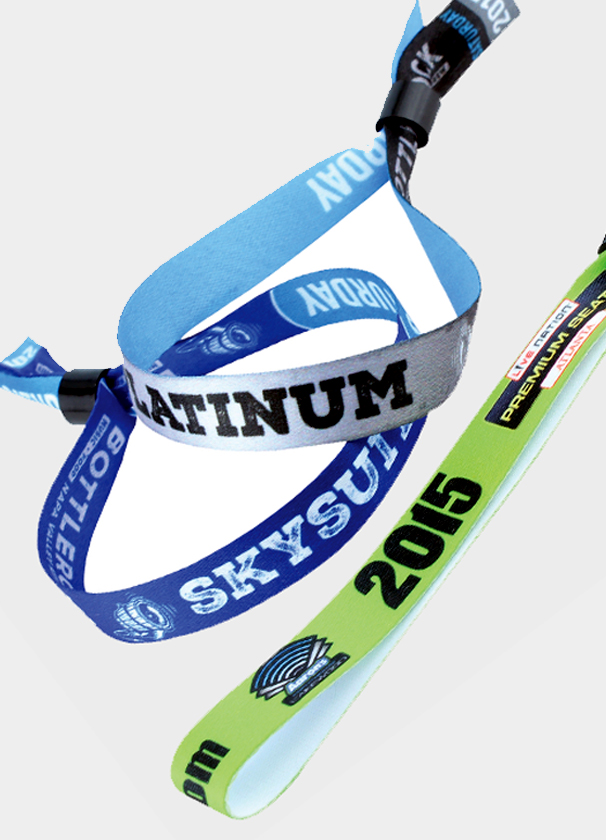
Satin stick-on passes fill a different role entirely. These adhesive cloth credentials are the default for single-day backstage access at concerts and touring stops because they are fast to distribute, easy to color-code, and impossible to transfer once applied. The material decision is not cosmetic. A pass that degrades during your event becomes easier to counterfeit and harder for security to verify. If you are running a multi-day outdoor event, ask your supplier what substrate they recommend for environmental durability, and ask to see a sample that has been through wear testing, not just a fresh-off-the-press proof.
How Do Anti-Counterfeiting Features Actually Protect Your Event?
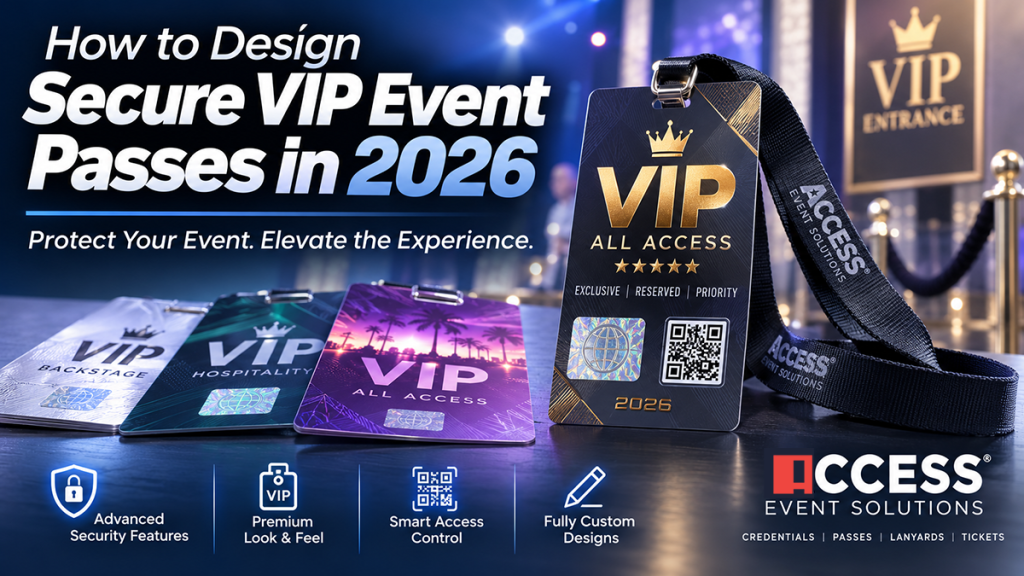
Counterfeiting has gotten easier. A high-resolution home printer can reproduce the visible elements of most standard badges well enough to fool a gate check in low light. That is why layered security, combining visible, covert, and digital features, has become the baseline for credentialing at high-profile events.
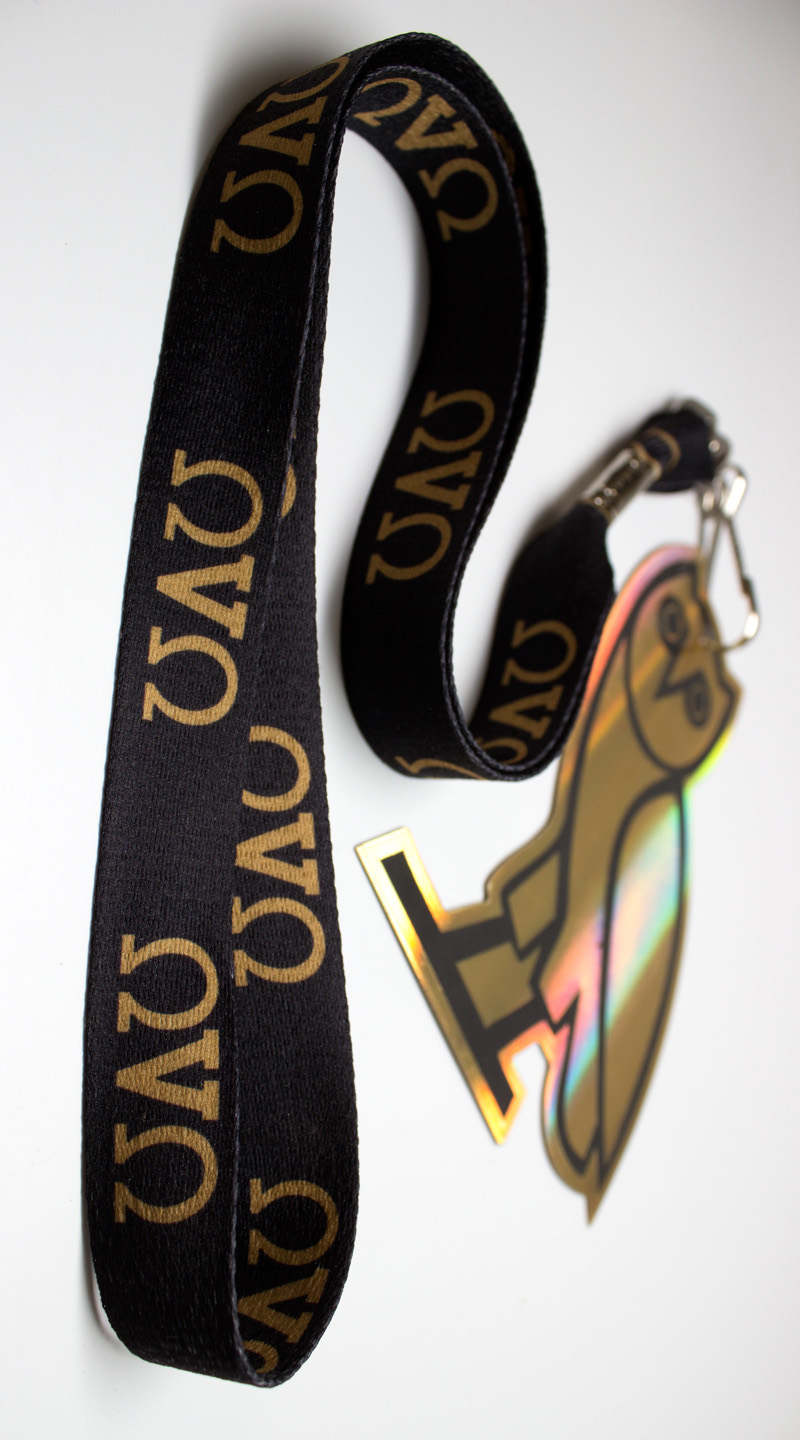
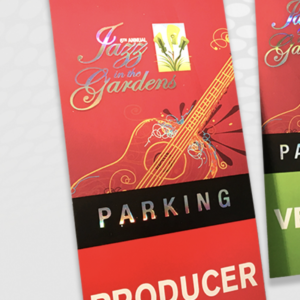
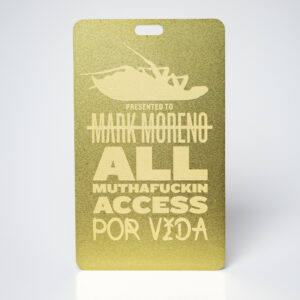
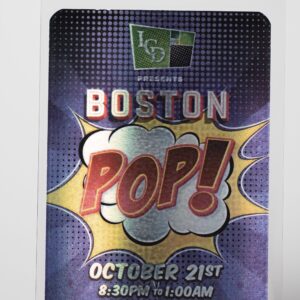
Hot foil stamping is one of the most effective visible deterrents because it requires commercial stamping equipment to reproduce. The process involves pressing metallic or holographic foil onto the pass surface using a heated die, and the result is a finish that catches light in ways a printer cannot replicate. When a supplier offers holographic foil in multiple metallic finishes, the counterfeiting bar rises further because replicating the layered effect demands access to the same specialized equipment and materials.
UV-reactive ink adds a covert layer that is invisible under normal lighting but reveals unique patterns under ultraviolet light. Security staff with handheld UV lights can authenticate a credential in seconds, even while processing a long entry line. Micro-text printing works on a similar principle: text that appears as a solid line to the naked eye becomes readable under magnification, giving checkpoints another verification method without slowing throughput.
CISA’s Public Venue Credentialing Guide, published in July 2026, recommends adding holograms or other protective measures to credentials to reduce counterfeiting potential. The guide also recommends making credentials user-specific and nontransferable by including a photo of the holder. When you are evaluating suppliers, ask which of these layers they produce in-house versus outsource. A supplier that controls foil stamping, UV ink application, and variable data printing under one roof can coordinate those layers more precisely than one that sends components to multiple subcontractors.
Why Does In-House Production Matter for Quality and Turnaround?
The difference between a supplier that manufactures credentials in-house and one that brokers production through third parties shows up in two places: quality control and speed.
When foil stamping, printing, and lamination happen in the same facility, the design team and the press operators can coordinate directly. Foil placement requires collaboration between artists and press operators to ensure the stamping die aligns with the artwork, and slight variations in heat and pressure can cause foil to crack or not adhere correctly. That kind of fine-tuning is difficult to manage across separate facilities.
In-house production also compresses timelines. Access Event Solutions, for example, manufactures credentials in Sparks, Nevada with a standard production window and a 72-hour rush capability for late additions and reprints. That rush window matters because events generate last-minute credential needs constantly: a sponsor adds VIP guests two days before the show, a performer’s touring party grows, a security plan changes and requires new access tiers. A supplier that controls its own production floor can absorb those changes without the cascading delays that come from rerouting orders through external vendors.
Ask potential suppliers where their production happens. If the answer is vague, or if the supplier primarily brokers orders to overseas facilities, you should understand the turnaround implications and the degree of quality control they have over the finished product.
What Questions Should You Ask About Fulfillment and Delivery?
Fulfillment is where credential orders most often go wrong, and it rarely gets the attention it deserves during supplier evaluation. A beautifully designed, highly secure pass that arrives two days after your event starts is worthless.
Start with standard lead times. Some custom credential suppliers operate on a 6-to-10-week standard production window for complex orders that include foil, variable data, and custom shapes. That window needs to be built into your event planning timeline well before you finalize artwork. Then ask about rush capability. Events are unpredictable. You need to know whether your supplier can produce a batch of replacement credentials within 72 hours if a security plan changes or a shipment is damaged in transit.
Shipping options matter too. A supplier that offers multiple carriers and shipping speeds, including overnight, gives you flexibility when deadlines shift. Ask whether they handle domestic and international shipping, and whether they have experience shipping to venue loading docks on tight event-day timelines.
Variable data printing adds a fulfillment layer that many planners underestimate. When each credential carries a unique name, title, barcode, or QR code, the production process includes data handling, proofing, and batch printing that requires careful sequencing. Ask how the supplier manages variable data workflows: do they print in batches, how do they handle last-minute name changes, and what is their process for onsite printing if walk-in registrations need to be accommodated?
How Should You Evaluate a Supplier’s Design and Customization Capabilities?
Your credential is often the first branded item an attendee receives and the last thing they look at before leaving. It represents your event, your sponsors, and the experience you are delivering. The design should reflect that, but it also needs to serve a functional purpose.
Look for a supplier with an in-house graphic design team that understands how event credentials actually get used. A designer who has produced passes for touring acts and conferences knows that the access level text needs to be readable from several feet away, that color coding needs to be distinguishable under stage lighting and outdoor sunlight, and that the front of the credential should communicate access rights in under two seconds.
Back-of-badge sponsorship is an underutilized revenue opportunity that a good credential supplier will bring to your attention. The back of a conference badge or VIP pass is real estate that sponsors will pay for, and when the credential is high quality enough that attendees keep it, that sponsor impression lasts well beyond the event.
Ask to see a portfolio of past work across different event types. A supplier that has produced credentials for concerts, sports events, government programs, and corporate conferences has the range to handle your specific design requirements. Ask about their proof process, too. Art proofs within 2 to 3 business days after estimate approval give you time to iterate on the design without compressing your production window.
What Role Does Technology Play in Modern Event Credentials?
RFID and NFC technology have moved custom event passes from passive identification tools to active components of the event experience. A credential with an embedded chip does not just verify that someone belongs in a restricted area. It can process cashless payments at food vendors, log check-ins at sponsor booths, enable social media integration, and collect data that helps you demonstrate ROI to sponsors after the event.
CISA’s credentialing guide highlights RFID as a technology that enables contactless scanning and immediate data retrieval, supporting real-time monitoring and instant validation of credentialed individuals. For sports venues, RFID credentials allow staff to gain quick, secure access to designated areas like locker rooms, press boxes, and broadcast booths. For music festivals and concerts, chip-embedded wristbands can be valid for a single day or the full run of the event.
NFC credentials add another dimension. At its simplest, NFC enables a tap-to-verify function that replaces manual visual checks at entry points. At its most capable, NFC turns the credential into an interactive platform where VIP guests can tap to access event schedules, connect with sponsors, redeem vouchers, or receive personalized content.
When comparing suppliers, ask whether they encode and embed chips in-house or outsource that step. In-house encoding gives the supplier direct control over chip programming and quality testing. Ask about compatibility with your existing event management software, too. A credential that integrates with your registration platform and access control system is significantly more useful than one that operates in isolation.
How Do You Compare Pricing Without Sacrificing Quality?
The lowest per-unit cost on a credential quote can be misleading. Cheap passes often mean cheap materials, outsourced production, limited security features, and slow turnaround on changes. When you evaluate pricing, evaluate what is included.
Does the quote include design services, or is graphic design billed separately? Are anti-counterfeiting features like holographic foil and UV ink standard, or are they add-on charges that inflate the final cost? Is variable data printing included in the per-unit price, or does it carry a separate setup fee? How many rounds of proofing are included before additional charges apply?
Ask about minimum order quantities and how pricing scales with volume. A supplier that offers competitive pricing at lower quantities gives you flexibility when you are running smaller VIP programs alongside larger general admission credential runs. Ask whether they offer sample kits so you can see and handle the actual materials before committing to a large order.
The most useful comparison is total cost of ownership across the credential lifecycle: design, production, security features, variable data, fulfillment, rush fees, and shipping. Two suppliers quoting different per-unit prices may land at very different totals when you factor in everything the event actually requires.
Access Event Solutions provides complimentary consultations, sample kits, and artwork guidelines upfront so planners can evaluate materials and production quality before placing an order. That kind of transparency in the evaluation phase saves time and reduces the risk of discovering quality issues after production is already underway.
Choosing a custom event pass supplier is a security decision, a branding decision, and an operational decision wrapped into one purchase order. The planners who get it right are the ones who look past the proof file and ask the harder questions: what is this pass made of, how is it protected, who is making it, how fast can it get here, and what happens when something changes at the last minute.
If you are sourcing credentials for an upcoming event, start by requesting sample kits from your shortlisted suppliers and comparing the materials side by side. The difference between a credential that works under real event pressure and one that does not is something you can feel in your hands before you ever place the order.